Service Hotline
13918477656
Date:2024-12-29 11:42:37 Click:209order
Building a South Korean booth is not only a physical task, but also a technical task. The materials used in the construction of Korean exhibition booths are diverse and dazzling, and exhibitors are not very familiar with the craftsmanship and details of the materials. Today, the editor of Guoyuan Exhibition will share with you some practical knowledge and the basic production process of booth construction.
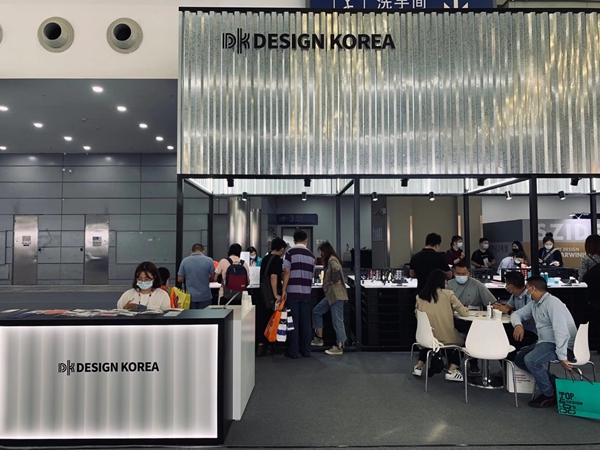
1. Common ground structures for booth construction
Wooden platform, illuminated platform, ground carpet, bottom layer, illuminated glass platform, simulated grass carpet, tile laying, wooden platform carpet laying.
Process requirements:
01. Wooden platforms typically have a platform frame ranging from 1 meter to 2.2 meters to 10 centimeters, followed by a 12 centimeter board, and finally a carpet or floor.
02. The luminous platform usually adopts an iron frame, with fluorescent tubes and milky white film placed on the top. According to the requirements, transparent printing can be installed. The top layer is made of glass with a thickness of 12-15cm, which can be determined according to the size of the force surface. The internal lighting must be uniform and have strong transparency.
03. The carpet should be flat, with glue added to the joints, and there should be no cracks or protrusions.
04. The floor requires minimal joints and should not be smooth.
05. The glass platform has tight seams and no sliding, and should be thoroughly cleaned.
2. Korean booth construction, wall structure, and styling
Single sided wall (also known as single clad wall), double-sided wall (double clad wall), commonly used surface decorations: paint, fireproof board, stickers.
Process requirements:
01. The so-called single-sided wall refers to one side of the board wall coated or coated with fireproof board, while double-sided wall refers to both sides coated or coated with fireproof board. Many exhibition halls stipulate that booths near the aisle cannot have single panel walls to avoid affecting the overall aesthetics.
02. It is best to use high-density board as the substrate for coating materials. Single layer walls are usually made of 5mm boards as the base material, and then glued with fireproof boards. The foaming of fireproof boards is mainly related to temperature or uneven coating.
03. The middle layer of the wooden structure panel wall is made of wooden keel. The size and thickness of the keel can be determined based on the height and height of the wall. The size of the keel is generally 30cm square. If the wall is low and not under stress, a 40cM-50cm square wooden keel can be used.
04. If support is required, the density of the keel and the thickness of the sealing plate need to be considered for the panel wall. Iron keel or steel pipe can also be used for stress, and then coated with fireproof board or paint.
05. The joints of fireproof boards should be smooth, minimal, uniform, visually comfortable, and free of protrusions. It is best to apply putty powder at the joint after pasting.
06. The overall color of the coating should be consistent, without cracks, and the surface should be smooth, uniform, and free of impurities.
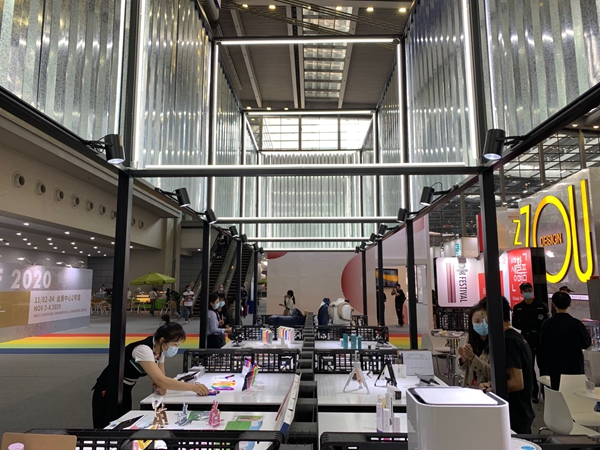
3. Iron frame structure Korean booth construction
Process requirements:
01. The iron frame structure is sturdy and stable, with a reasonable support structure, and the use of site facilities for suspension should be avoided as much as possible. Safe design, unified and beautiful visuals.
4. The booth structure adopts elastic fabric design
Common fabrics include mesh fabric and polystyrene fabric.
Process requirements:
01. It is best to stretch some fabrics with high fire resistance. The use of elastic fabrics is basically prohibited, and commonly used styles of elastic fabrics include mesh fabrics and polystyrene fabrics (currently, the Beijing Exhibition Center has issued fire safety certificates for materials before approving museums).
02. Process requirements for stretch fabric: The stretch fabric should be flat, wrinkle free, the gun nails should be firm, without warping, and should not be spliced as much as possible.
5. The use of lighting fixtures in the construction of Korean exhibition booths
Process requirements:
01. The entire area mainly uses dysprosium lamps or tungsten filament lamps to illuminate the entire area or local logo text as a whole (dysprosium lamp 150W). It has a relatively large aperture and good astigmatism.
02. Tube lights are mainly used for top decoration. Install a tube lamp on the top wooden shape to illuminate the lower area, which has a slightly lower wattage compared to dysprosium lamps (tube lamps below 100W).
03. Bull eye lamp is used to illuminate a certain product or decorate a certain area, but the aperture is small and the scattering is poor. (40W to 60W)
04. Long arm spotlights are mainly used to illuminate display boards or iconic text. Compared to the bullseye, their aperture is relatively larger and their brightness is higher
05. Fluorescent lamps are mainly used to illuminate light boxes or light box fabrics. The distance between each lamp is 15CM-20CM, and the wattage range is 40W-100W. It can also be used for local light leakage, where the light emitted by the fluorescent tube is relatively uniform.
6. Building a booth using glass materials
Process requirements:
The height of the entire piece of glass cannot exceed 2.5 meters, and the width is 1.2-1.5 meters. If it is too high, try to use tempered glass with a thickness of not less than 10 centimeters. It is best to decorate the glass in the negotiation area with sandpaper to prevent accidental collisions.
02. Pay attention to the combination of materials and it is best not to use transparent organic films to decorate the booth. Organic transparent films are difficult to clean and prone to discoloration. The more scratches, the heavier the scratches. It is best not to use it alone, it can be used for installation and printing images.